Hubble finds nearby dwarf galaxies are missing most of their oxygen
Supernova-driven winds appear to strip small galaxies of heavy elements far more effectively than models predict.
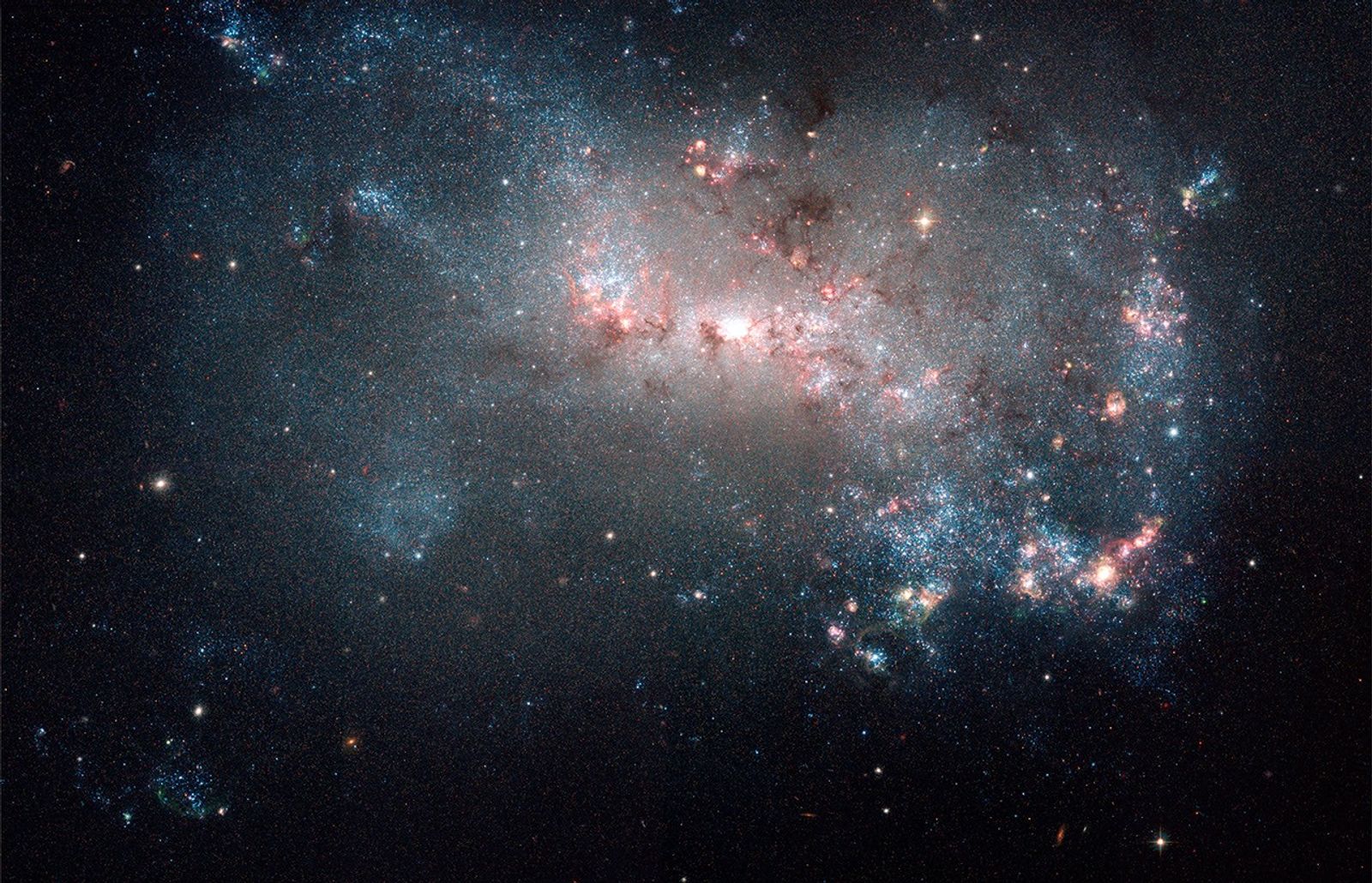
Astronomers using NASA's Hubble Space Telescope have uncovered a puzzle in our cosmic neighborhood: 37 nearby dwarf galaxies hold far less oxygen than their stars should have produced.
The research comes from the Galaxies Losing Oxygen via Winds (GLOW) project, funded by NASA and the National Science Foundation. The team reconstructed each galaxy's history of star formation to estimate how much oxygen its stars made, then traced how much remains in the stars, in the gas between them and in dust. Only a small fraction is still there.
“Oxygen is produced by stars, which are inside of galaxies,” said co-investigator Grace Telford of the University of Utah. The missing oxygen, the researchers conclude, must have been blown out, and galactic winds driven by supernova explosions appear to remove it from low-mass galaxies more effectively than current models predict.
The galaxies were chosen because they are close enough for Hubble to resolve their individual stars. Alongside Hubble's archival images, the team used data from NASA's retired Spitzer Space Telescope, the Very Large Array and the Australia Telescope Compact Array. The study was published in The Astrophysical Journal.
Source: This story is based on information from NASA: NASA's Hubble Uncovers Case of Missing Oxygen in Nearby Dwarf Galaxies.
Images: NASA, ESA, Hubble Heritage–ESA/Hubble Collaboration, Alessandra Aloisi (STScI, ESA), via NASA.