Four volunteers step out after 378 days in NASA's simulated Mars habitat
The CHAPEA Mission 2 crew lived in a 3D-printed, windowless home in Houston, with messages to Earth delayed by up to 22 minutes.
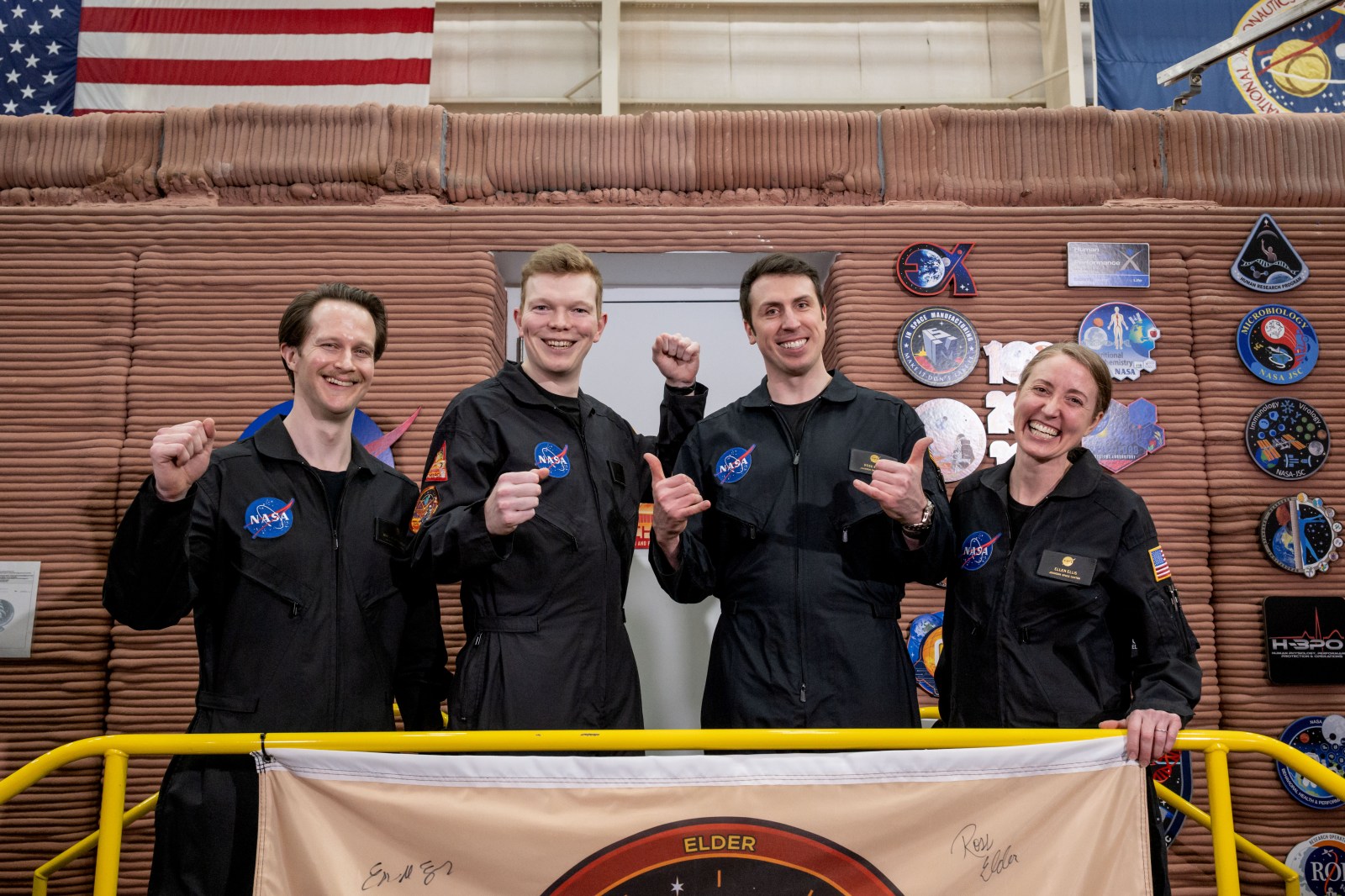
After 378 days without windows, outside sounds or live calls with family, four research volunteers walked out of NASA's Mars Dune Alpha habitat at Johnson Space Center in Houston on Oct. 31, completing the agency's second yearlong Mars surface simulation.
The crew of commander Ross Elder, medical officer Ellen Ellis, science officer Matthew Montgomery and flight engineer James Spicer entered the roughly 1,700-square-foot, 3D-printed habitat on Oct. 19, 2025. Inside, they carried out simulated Marswalks, robotic operations, habitat maintenance, exercise and crop growing, while messages to and from “Earth” were delayed by up to 22 minutes each way.
“It would be difficult to convince someone who has never lived in isolation that most days, I don't feel isolated,” Ellis said. Montgomery put it more simply: “It's really the people that make exploration possible.”
The mission, called CHAPEA (Crew Health and Performance Exploration Analog), is designed to show how crews cope with the isolation, limited resources and equipment failures a real Mars mission would bring. The first CHAPEA mission ended in July 2024. The crew now faces two weeks of evaluations and debriefs, and researchers will use the data to help NASA weigh health and performance risks against resources for future missions.
Source: This story is based on information from NASA: CHAPEA Mission 2 Crew Reflects After 378 Days on Simulated Mars.
Images: NASA/James Blair, via NASA.